Context
I led this Bicknell Digital client delivery for Gilston Waste Management. The project moved from early v1 ideas into a clearer v2 scope that combined a full public website redesign with a focused customer portal MVP on a separate subdomain.
The problem
Gilston had a broad service offer across waste management, specialist cleaning, property maintenance, infrastructure support, environmental services, support services, and telecoms and IT support. The public website needed clearer service navigation, stronger quote and callback journeys, better service-led SEO, and a more useful location experience. In parallel, customers needed secure access to reports and documents without exposing files publicly or creating heavy manual admin.
My role
I led discovery, scope refinement, Figma wireframes and mockups, WordPress architecture direction, custom theme and plugin planning, CMS component design, Leaflet.js map delivery, image treatment, forms, SEO setup, and phased implementation planning. I produced five rounds of Figma wireframes and mockups with client feedback and reshaped the original v1 plan into a more focused v2 delivery scope.
Approach
I reviewed the full service structure and journeys, then planned delivery in phases across portal MVP, public redesign, SEO content, and launch polish. The portal was designed as a separate secure product area using WordPress authentication, token-based API access, guarded routes, and protected downloads. The public website was redesigned with reusable templates, CTA bands, callback panels, service and region page structures, and a custom Leaflet.js Areas We Cover map that connected homepage interaction to region SEO journeys. Earlier scope ideas including Signable integration, portal-native chat, service toggles, and per-customer document stores were explored and then removed from v2 to reduce integration risk and keep the first release focused.
Phasing and scope control
Delivery was organised across five phases from wireframes and specification to portal MVP, public redesign, content and SEO, then launch polish. Five rounds of Figma wireframes and mockups were produced and iterated with client feedback before final build direction was signed off.
Customer portal MVP
The portal was scoped for a separate subdomain and designed around WordPress-authenticated access, token handling, role mapping, guarded routes, reports tables, protected document downloads, API hardening, and practical QA and handover. File access was planned through secured proxy paths or short-lived signed URLs instead of direct public file exposure.
Public website redesign and map UX
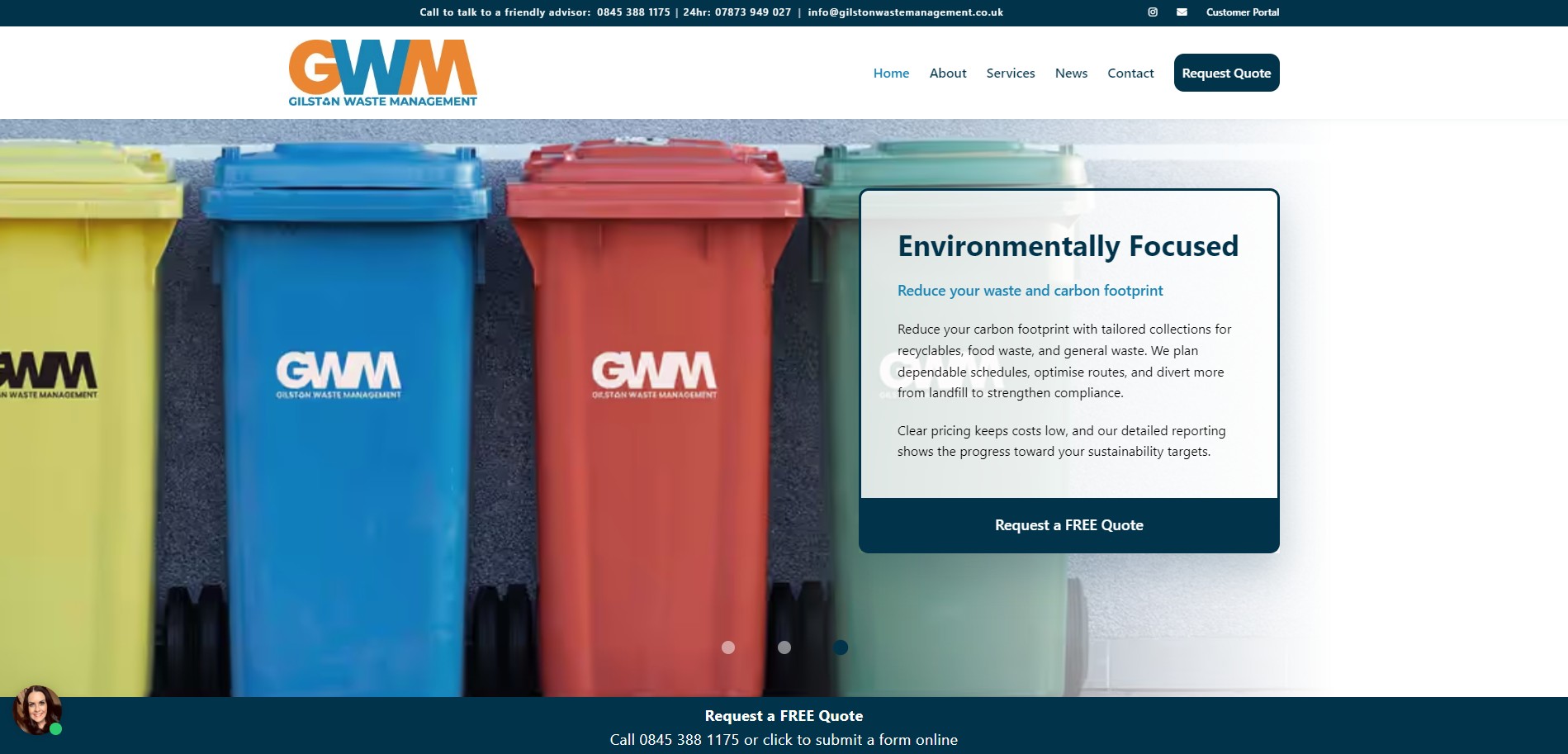
The website was treated as a full redesign with refreshed visual system, reusable WordPress templates, stronger form journeys, and service-led page structures. A custom Leaflet.js Areas We Cover map on the homepage gave users an interactive coverage view and linked directly to location and region content journeys.
Imagery, SEO, and performance
Imagery used Shutterstock-led sourcing and treatment with responsive crops, WebP and JPEG outputs, lazy loading, and brand overlays. SEO work covered service and region architecture, internal linking, metadata, breadcrumbs, JSON-LD, sitemap and robots setup, and accessibility and performance checks.